
Gothic Quarter of Barcelona
The Gothic Quarter in Barcelona: history, the Cathedral, Roman ruins, Plaça Sant Jaume. Route and tips for tourists.
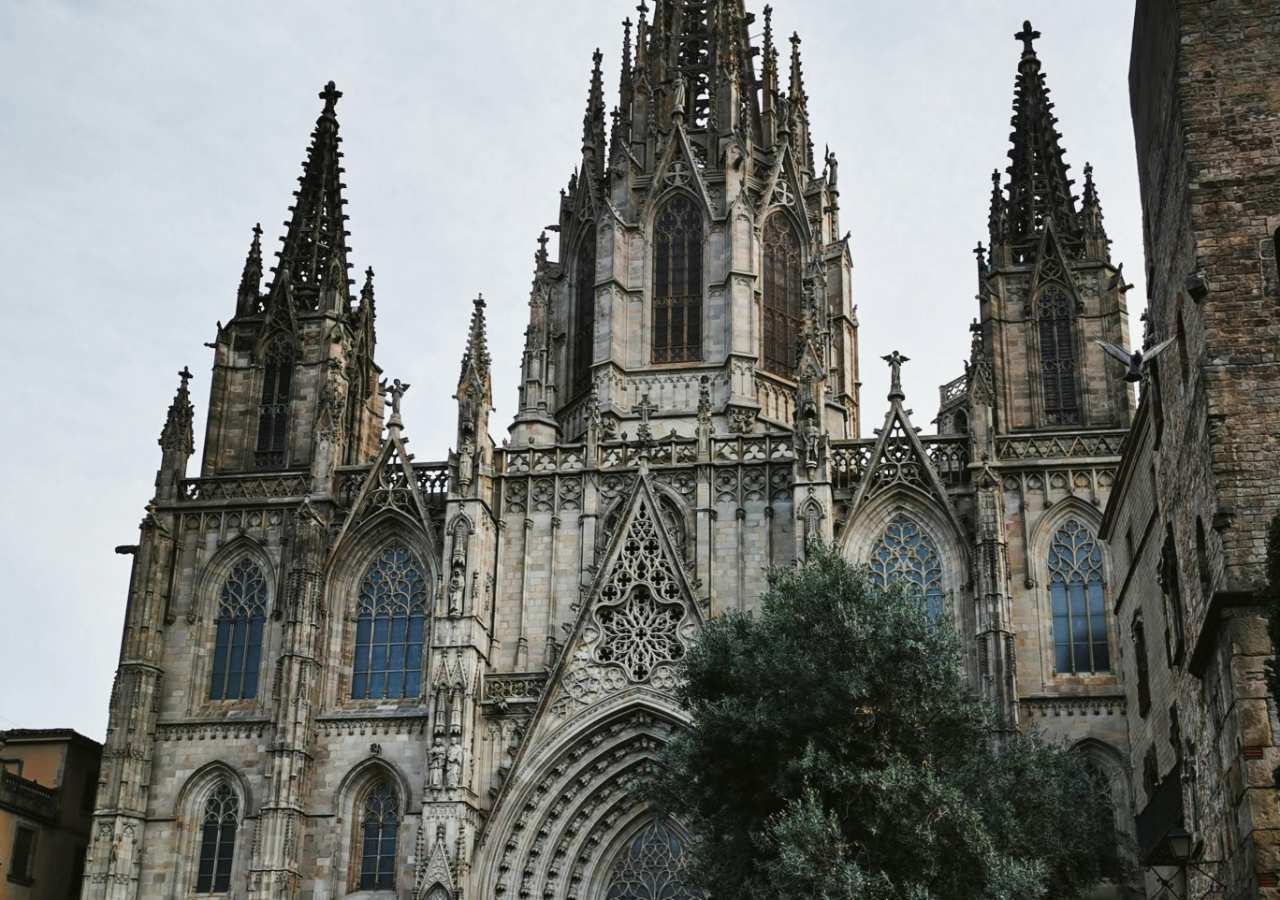
The Gothic Quarter (Barri Gòtic or Barri Còtic) is a historical and cultural ensemble that serves as a dynamic center for both Barcelona tours and active urban leisure. Its history spans two thousand years (starting from the Roman settlement of Barcino), and the architecture consists of ancient mansions. For those who value time and plan to visit the city, including its nightlife, the best choice is to order airport transfer from Barcelona with a private driver. This guarantees quick and safe delivery to your hotel or leisure center without delays, bringing you closer to the start of your walking tour of the Gothic Quarter.
Formation of the Quarter
The quarter is bounded by Plaça de Catalunya, the avenues of Via Laietana and La Rambla. The name is given after the monumental buildings of the Aragonese kingdom. Most buildings date back to the 14th-15th centuries.
Car traffic here is limited, and most streets are pedestrian, allowing one to fully experience the atmosphere of ancient Barcelona. Beneath the quarter, fragments of the Roman settlement have been preserved, including the Roman forum on the site of the current Plaça de Sant Jaume. Fragments of ancient walls (Carrer de la Tapineria and del Sots-Tinent Navarro) showcase its imperial past.
The Cathedral (La Catedral de la Santa Cruz y Santa Eulalia)
Located in the center of the quarter, it is the dominant structure that lends the quarter its name, the Cathedral Quarter. Its luxurious Gothic facade is difficult to view due to the dense construction. The temple is dedicated to Saint Eulalia. In memory of the 13-year-old martyr of the 4th century, thirteen white geese are kept on the cathedral grounds, symbolizing her purity.
Plaça Nova
Founded in 1355, it is one of the oldest squares. Until the 18th century, it served as a city gate. The ensemble includes the Bishop's Palace, fragments of the Roman wall, and the modern building of the College of Architects with friezes by Pablo Picasso.
Casa del Ardiaca
Located between Plaça Nova and the Cathedral Square. Fragments of the fortress wall are visible at the base. Since the late 12th century, it has been the residence of the diocese's officials. Reconstructions in the 16th and 19th centuries brought a mix of styles: Gothic, Baroque, and Modernism. It currently functions as a local archive.
Plaça de Sant Jaume
The central square of the city's political life, accessible via Carrer del Bisbe from Plaça Nova. Here are located the administrative buildings: the Barcelona City Hall, the House of Canons, and the Government Palace (Palau de la Generalitat). A Neo-Gothic bridge from 1926 connects the last two buildings.
City Hall Building
A combination of a 19th-century Neo-Gothic facade with examples of Gothic architecture (the "Hall of Hundred", the "Staircase of Honor" gallery). The City Hall can be visited on Sundays (from 10:00 to 13:30). Ruins of a pagan sanctuary dedicated to Emperor Augustus (1st century AD) have also been preserved nearby.
Plaza del Rey
Known as the site of epochal events: on April 3, 1493, Christopher Columbus was received here by Ferdinand and Isabella. The architectural ensemble of the square is an example of "pure" Gothic. It is named after the Royal Palace, the main residence of the Counts of Catalonia (13th-15th century). Nearby is the Historical Museum of Barcelona (a 15th-century mansion). The most valuable part of the museum is the archaeological excavation area, showcasing underground layers of history. The museum is closed only on Mondays.
El Call
The former Jewish quarter, known for its secret passages beyond the fortress walls, some of which are accessible for tours.
Art Cabaret "Els Quatre Gats"
An iconic place that has served since the 19th century as a meeting spot for the city's bohemia, including the young Picasso. It was created after the prototype of the Parisian "Le Chat Noir".
In the vicinity of the quarter, there are many cafes and restaurants where you can relax and try dishes of Catalan cuisine. There is a special atmosphere here that combines history and modernity.
FAQ: Brief Answers for Travelers
1. What is special about the Gothic Quarter?
It is the historical center of Barcelona, built on Roman ruins. It is famous for its labyrinth of narrow streets and the architectural ensemble of the 14th-15th centuries, combining Gothic, Baroque, and Modernism. Essentially, it is the architectural soul of the city.
2. Is it possible to drive through the Gothic Quarter by car?
This is almost entirely a pedestrian area, which creates the atmosphere. Given this, for maximum comfort and time-saving, it is better to pre-order airport transfer that will take you directly to the start of the walking route.
3. Where is the Cathedral of Barcelona located?
It is located in the very heart of the Gothic Quarter and is its main dominant feature. Look for it among the narrow streets: its luxurious facade is hard to miss!
4. What to see besides the cathedral?
Be sure to visit the political center - Plaça de Sant Jaume (with the City Hall and Government Palace), as well as Plaça del Rei, where Columbus was once received. And, of course, the legendary art cabaret "Els Quatre Gats".
5. What is "El Call"?
This is the former Jewish quarter (until 1492). It is the most mysterious part of the area, known for its narrow passages and the history of secret paths that can be explored through a tour.
6. When is the best time to visit the City Hall?
The City Hall building (Casa de la Ciutat) is open for visits on Sundays from 10:00 to 13:30. This is your chance to see the interior Gothic halls, including the "Hall of Hundred".
What people say about us
100% real opinions about our care and services
